
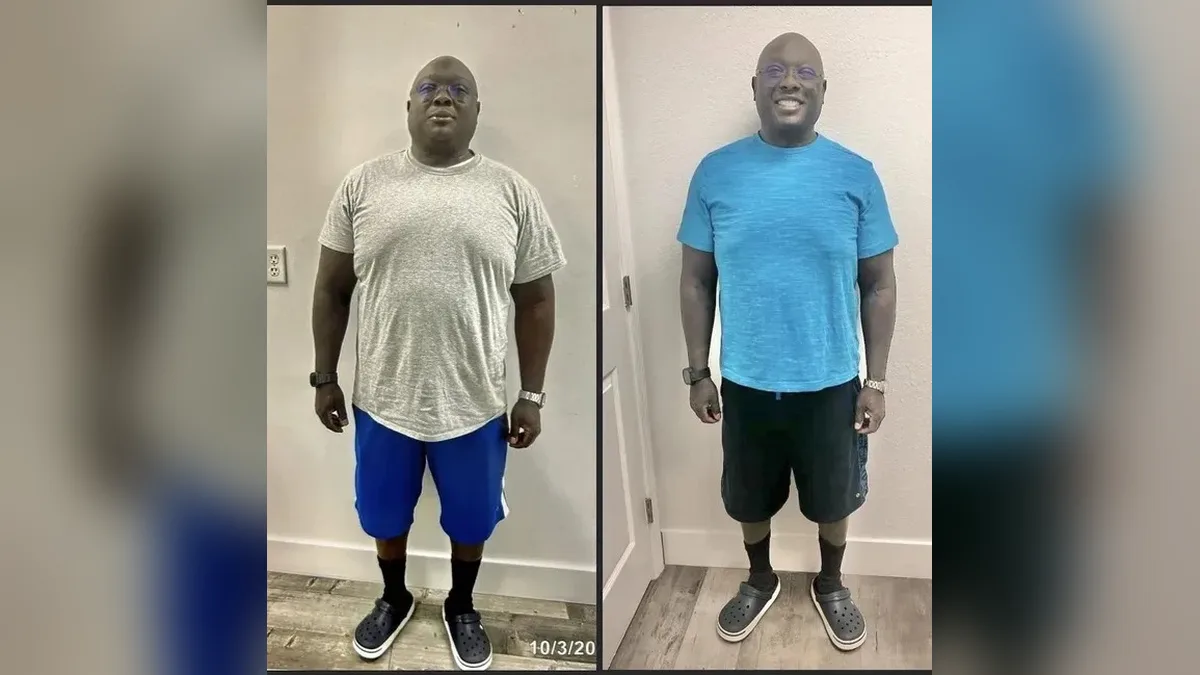
MASLD (formerly NAFLD) affects about 24% of U.S. adults, and about 1.5% to 6.5% have the inflammatory form, MASH [1]. In a 52-week lifestyle study of 293 patients with biopsy-proven NASH, 58% of those who lost 5% or more of body weight had NASH resolve on biopsy, versus 90% of those who lost 10% or more, and 45% of the latter group had fibrosis regress [5]. AASLD says exercise has liver benefit independent of weight loss [6].
Key takeaways
- About 24% of U.S. adults have NAFLD (MASLD) and about 1.5% to 6.5% have NASH (MASH), according to NIDDK; FDA puts MASH at about 6% of adults, or 14.9 million people [1][9].
- In the Vilar-Gomez 52-week study, NASH resolved in 25% of patients overall, 58% of those who lost 5% or more of body weight, and 90% of those who lost 10% or more [5].
- AASLD guidance states that weight loss of 3% to 5% improves steatosis, but greater loss (more than 10%) is generally required to improve NASH and fibrosis [6].
- A meta-analysis of 14 randomized trials (551 adults) found exercise was associated with 3.51 times the odds of a 30% or greater liver-fat reduction, and the response was independent of weight loss above 5% [7].
- FDA granted accelerated approval to Rezdiffra on March 14, 2024 and to Wegovy for MASH on August 15, 2025, both for adults with moderate to advanced fibrosis and both alongside diet and exercise [8][9].
What are MASLD and MASH?
MASLD is the current name for excess fat in the liver that is linked to metabolic health, and MASH is the form that also involves inflammation and liver cell damage. NIDDK says NAFLD is also called MASLD (metabolic dysfunction-associated steatotic liver disease) and NASH is also called MASH (metabolic dysfunction-associated steatohepatitis) [1].
The rename came from a multi-society consensus process published in Hepatology in 2023. It moved away from the old definition that relied on excluding other causes and instead required at least one of five cardiometabolic risk factors. It also created a category called MetALD for people with MASLD who drink more alcohol, defined in the abstract as 140 to 350 g per week for females and 210 to 420 g per week for males [10].
NIDDK describes two subtypes. NAFL (also called MASL) is fat in the liver with little or no inflammation. NASH (MASH) adds inflammation and damage and can progress to fibrosis and cirrhosis [1]. Most people with NAFLD have the first type, and only a small number have NASH [1].
It is often silent. NIDDK calls NAFLD "a silent disease with few or no symptoms" and says a person may not have symptoms even after cirrhosis develops [2]. Many studies and older NIDDK pages still use the older terms NAFLD and NASH, so this article uses whichever term a source used.
How common is fatty liver, and who gets it?
Fatty liver is common. NIDDK says about 24% of U.S. adults have NAFLD and about 1.5% to 6.5% have NASH [1]. In its August 2025 announcement of a MASH approval, FDA said about 6% of U.S. adults, or 14.9 million people, have MASH [9].
Body weight and blood sugar are the strongest links. NIDDK reports NAFLD in up to 75% of people who are overweight and in more than 90% of people with severe obesity. It also cites studies that found NAFLD in one-third to two-thirds of people with type 2 diabetes [1]. Other associated conditions on the same page include metabolic syndrome, high blood pressure and abnormal cholesterol and triglycerides [1].
NIDDK also notes that it becomes more common with age, that it is most common among Hispanic individuals, followed by non-Hispanic white and Asian American individuals, and that close to 10% of U.S. children ages 2 to 19 have it [1]. Those are prevalence figures, not predictions about any one person. A clinician has to evaluate an individual to know whether liver fat is present and how advanced it is.
How much weight loss does the liver need?
The more weight a person lost, the more the liver biopsy improved, and the thresholds differ for fat, inflammation and scarring. NIDDK says losing at least 3% to 5% of body weight can reduce fat in the liver, and that you may need to lose up to 7% to 10% to reduce liver inflammation and fibrosis [3]. AASLD practice guidance says weight loss of 3% to 5% improves steatosis, but greater loss (more than 10%) is generally required to improve NASH and fibrosis, in a dose-dependent manner [6].
The data behind those thresholds come largely from Vilar-Gomez and colleagues, who published in Gastroenterology in 2015. They followed 293 patients with biopsy-proven NASH through a 52-week lifestyle program in Havana, Cuba, and 261 had paired biopsies at baseline and week 52 [5]. Overall, 25% had NASH resolution, 47% had a lower NAFLD Activity Score and 19% had fibrosis regression [5].
Source: [5] Vilar-Gomez et al., Gastroenterology 2015 (MEDLINE abstract record) [5].
Among 88 patients who lost 5% or more, 58% (51 of 88) had NASH resolve and 82% (72 of 88) had at least a 2-point drop in activity score, both significantly higher than in patients who lost less than 5% (P < .001). In patients who lost 10% or more, every patient had a lower activity score, 90% had NASH resolution and 45% had fibrosis regression [5].
There are limits. This was a prospective study at one center, not a randomized trial that assigned people to different weight-loss targets, so people who lost more may have differed in other ways, such as motivation or baseline disease. The result shows a dose-response pattern, not a guarantee for any individual [5].
A second, smaller piece of evidence comes from the Look AHEAD Fatty Liver Ancillary Study in adults with type 2 diabetes. Of 96 participants with liver imaging at baseline and 12 months, those in an intensive lifestyle program aiming for at least 7% weight loss lost 8.5% of body weight versus 0.05% in the education group, and their measured liver steatosis fell 50.8% versus 22.8% (P = 0.04). Among people without NAFLD at baseline, 3% (1 of 31) in the lifestyle group developed it versus 26% in the comparison group [11].
| Source | Weight loss level | Liver finding |
|---|---|---|
| NIDDK, treatment page (reviewed April 2021) [3] | At least 3% to 5% | Can reduce fat in the liver |
| NIDDK, treatment page [3] | Up to 7% to 10% | May be needed to reduce inflammation and fibrosis |
| AASLD guidance, 2023 [6] | 3% to 5% | Improves steatosis |
| AASLD guidance, 2023 [6] | More than 10% | Generally required to improve NASH and fibrosis |
| Vilar-Gomez, 261 patients, 52 weeks [5] | 5% or more / 10% or more | NASH resolution 58% / 90%; fibrosis regression 45% at 10% or more |
NIDDK adds a caution: rapid weight loss and malnutrition can make liver disease worse, so gradual loss is the stated goal [3]. For how weight loss of this size compares with other health outcomes, see our guide to the health benefits of 5 to 15 percent weight loss.
Does exercise help the liver even without weight loss?
Yes, in trial data exercise lowered liver fat even when weight loss was small. A 2023 systematic review and meta-analysis in the American Journal of Gastroenterology pooled 14 randomized trials with 551 adults with NAFLD (mean age 53.3, mean BMI 31.1) and compared exercise training with no exercise [7].
Exercise was associated with 3.51 times the odds (95% CI 1.49 to 8.23) of a liver-fat reduction of at least 30% on MRI. A dose of at least 750 MET-minutes per week, which the authors describe as roughly 150 minutes per week of brisk walking, was associated with a response (odds ratio 3.73), while lower doses were not. The response was independent of weight loss exceeding 5% [7].
AASLD guidance says exercise, independent of weight loss, has hepatic and cardiometabolic benefit, and its guidance statement says patients should be strongly encouraged to increase activity to the extent possible [6]. NIDDK likewise says physical activity alone, even without weight loss, is beneficial [3].
The meta-analysis measured liver fat, not biopsy outcomes such as scarring, and it pooled relatively small trials [7]. For how exercise fits into a broader plan, including strength training, see our guide to exercise and weight loss.
Does the type of diet matter for fatty liver?
Calorie reduction matters most, and AASLD says several diet patterns appear comparable. Its guidance says patients who are overweight or have obesity should be prescribed a diet that leads to a caloric deficit, and that diets limited in carbohydrates and saturated fat and rich in fiber and unsaturated fats, such as the Mediterranean diet, should be encouraged for cardiovascular benefit [6].
The same guidance says low-carbohydrate versus low-fat diets, and saturated versus unsaturated fat diets, appear comparable in their ability to improve NAFLD and NASH. It adds that the benefit of the Mediterranean diet over other diets in small randomized trials is debated [6]. Our guide to low-carb, low-fat and Mediterranean diets covers the head-to-head weight data.
On specific foods, AASLD says excess calories, particularly from saturated fats, refined carbohydrates and sugar-sweetened beverages, are associated with obesity and NAFLD, and that excessive fructose consumption increases the risk of NAFLD, NASH and advanced fibrosis independent of calorie intake [6]. NIDDK's diet page advises avoiding foods and drinks with large amounts of simple sugars, especially fructose, limiting fats, and favoring unsaturated fats and low-glycemic foods [4].
What do NIDDK and AASLD say about alcohol?
NIDDK says the fat buildup in NAFLD is not caused by heavy alcohol use, but that people with it should minimize alcohol because it can further damage the liver [1][4]. When heavy drinking causes the fat buildup, the condition is called alcohol-associated liver disease instead [1].
NIDDK's diet page gives no numeric limit. AASLD gives the definitional thresholds: NAFLD is diagnosed when a person drinks less than 20 g per day (women) or less than 30 g per day (men), and moderate intake is 21 to 39 g per day for women and 31 to 59 g per day for men [6]. Its guidance statement says patients with clinically significant hepatic fibrosis (stage F2 or higher) should abstain from alcohol completely [6].
The 2023 nomenclature adds MetALD for people with MASLD who drink more than the MASLD range [10]. Which category applies, and what level of alcohol is reasonable for a particular person, is a clinician's judgment after reviewing liver tests, imaging and fibrosis stage. For alcohol while on GLP-1 medications, see our guide on that topic.
Where do medications fit in?
Two medications now carry FDA approval for MASH with moderate to advanced fibrosis, and both are used alongside lifestyle change, not instead of it. NIDDK's treatment page, last reviewed April 2021, says no medicines had been approved for NAFLD at that time, which is no longer current [3].
On March 14, 2024, FDA granted accelerated approval to Rezdiffra (resmetirom) for adults with noncirrhotic NASH and moderate to advanced fibrosis, to be used along with diet and exercise. In the trial, 888 people were randomized, and at 12 months NASH resolved without worse scarring in about 24% to 36% of treated patients versus 9% to 13% on placebo, with the ranges reflecting different pathologists' readings [8].
On August 15, 2025, FDA approved Wegovy (semaglutide) for MASH with moderate to advanced fibrosis, also under accelerated approval. In an interim analysis of 800 participants at week 72, MASH resolved without worse scarring in 63% on Wegovy versus 34% on placebo, and all participants received lifestyle changes [9]. We cover GLP-1 data in detail in our guide to GLP-1 medications, heart and liver. Whether any medication is appropriate depends on a clinician's evaluation, including fibrosis staging.
What this means in practice
- Liver fat often causes no symptoms; NIDDK calls NAFLD a silent disease with few or no symptoms [2].
- Weight loss shows a dose-response pattern in the research: 3% to 5% for liver fat, with more (7% to 10% per NIDDK, more than 10% per AASLD) generally needed for inflammation and scarring [3][6].
- In the Vilar-Gomez study, NASH resolved in 58% of patients who lost 5% or more and 90% of those who lost 10% or more, but that was an observational comparison at one center [5].
- Aim for gradual loss; NIDDK says rapid weight loss and malnutrition can make liver disease worse [3].
- Activity counts even if the scale barely moves; the pooled trials linked about 150 minutes per week of brisk walking to a liver-fat response independent of weight loss above 5% [7].
- Choose a diet you can sustain; AASLD says low-carbohydrate and low-fat approaches appear comparable, and it encourages Mediterranean-style eating for cardiovascular benefit [6].
- Discuss alcohol with a clinician; AASLD says people with significant fibrosis (F2 or higher) should abstain completely [6].
When to talk to a clinician
Raise fatty liver with a clinician if liver enzymes or an imaging report mention steatosis, if you have type 2 diabetes, obesity, high blood pressure or abnormal cholesterol. Because the condition is silent, the question of whether there is scarring usually needs blood tests, imaging or other assessment that only a licensed clinician can order and interpret.
At Healthy Weight Loss 4 U, every program begins with a clinician evaluation, and that evaluation is the place to raise liver health, alcohol use and any prior liver test results. A licensed clinician decides what is appropriate for you based on your history and exam, and no result can be promised.
Frequently asked questions
What is the difference between MASLD and NAFLD?
How much weight do I need to lose to improve fatty liver?
Can fatty liver be reversed with lifestyle change?
Does exercise help fatty liver if I do not lose weight?
Is any alcohol safe with fatty liver?
Are there FDA-approved medications for MASH?
Do I need a liver biopsy to know if I have MASH?
Sources
- Definition and Facts for NAFLD and NASH (MASLD and MASH). NIDDK, National Institutes of Health (last reviewed April 2021), 2021. www.niddk.nih.gov/health-information/liver-disease/nafld-nash/definition-facts
- Symptoms and Causes of NAFLD and NASH. NIDDK, National Institutes of Health (last reviewed April 2021), 2021. www.niddk.nih.gov/health-information/liver-disease/nafld-nash/symptoms-causes
- Treatment for NAFLD and NASH. NIDDK, National Institutes of Health (last reviewed April 2021), 2021. www.niddk.nih.gov/health-information/liver-disease/nafld-nash/treatment
- Eating, Diet and Nutrition for NAFLD and NASH. NIDDK, National Institutes of Health (last reviewed April 2021), 2021. www.niddk.nih.gov/health-information/liver-disease/nafld-nash/eating-diet-nutrition
- Weight Loss Through Lifestyle Modification Significantly Reduces Features of Nonalcoholic Steatohepatitis (MEDLINE abstract record; Vilar-Gomez E et al.). Gastroenterology, 2015. www.unboundmedicine.com/medline/citation/25865049/full_citation
- AASLD Practice Guidance on the Clinical Assessment and Management of Nonalcoholic Fatty Liver Disease (Rinella ME et al.; PDF copy hosted by natap.org). Hepatology / AASLD, 2023. natap.org/2023/HCV/AASLD_practice_guidance_on_the_clinical_assessment.293.pdf
- Exercise Training Is Associated With Treatment Response in Liver Fat Content by MRI Independent of Clinically Significant Body Weight Loss in Patients With NAFLD: A Systematic Review and Meta-Analysis (Stine JG et al.; institutional record). American Journal of Gastroenterology, 2023. pure.psu.edu/en/publications/exercise-training-is-associated-with-treatment-response-in-liver-/
- FDA Approves First Treatment for Patients with Liver Scarring Due to Fatty Liver Disease (Rezdiffra, March 14, 2024). U.S. Food and Drug Administration, 2024. www.fda.gov/news-events/press-announcements/fda-approves-first-treatment-patients-liver-scarring-due-fatty-liver-disease
- FDA Approves Treatment for Serious Liver Disease Known as MASH (Wegovy, August 15, 2025). U.S. Food and Drug Administration, 2025. www.fda.gov/drugs/news-events-human-drugs/fda-approves-treatment-serious-liver-disease-known-mash
- A multi-society Delphi consensus statement on new fatty liver disease nomenclature (Rinella ME et al.; institutional repository record). Hepatology, 2023. publires.unicatt.it/it/publications/a-multi-society-delphi-consensus-statement-on-new-fatty-liver-dis/
- Effect of a 12-Month Intensive Lifestyle Intervention on Hepatic Steatosis in Adults With Type 2 Diabetes (Lazo M et al.; institutional record). Diabetes Care, 2010. scholars.duke.edu/publication/768497
Keep reading
GLP-1 Medications, Heart and Liver: What Trials Show
Read →Health Benefits of 5 to 15 Percent Weight Loss
Read →Exercise and Weight Loss: What the Evidence Says
Read →Prediabetes, Type 2 Diabetes and Weight Loss: What Trials Show
Read →Questions about your own situation? A clinician can review your history and goals. Related: Personalized Weight Loss Counseling.